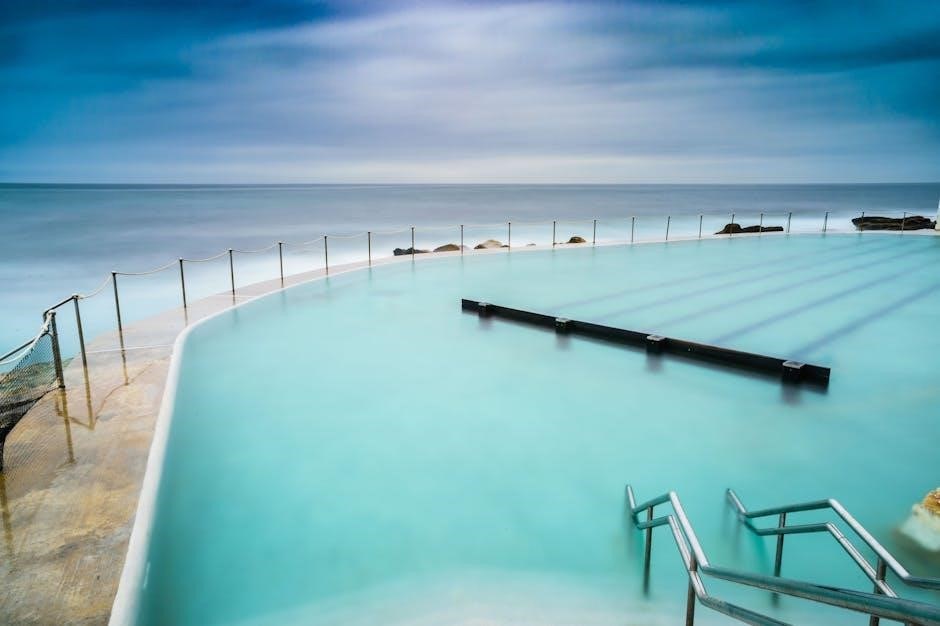
Instructional pools are vital for swim education, offering controlled environments for learning. These facilities support diverse programs, from water acclimation to advanced stroke refinement, benefiting all skill levels.
What is an Instructional Pool?
An instructional pool is specifically designed to facilitate the teaching and learning of swimming skills. Unlike recreational or competitive pools, these facilities prioritize safety and pedagogical effectiveness. They often feature variable depths, creating shallow areas ideal for beginners gaining water confidence.
These pools support a wide range of programs, including early childhood water acclimation, stroke development for intermediate swimmers, and technique refinement for advanced athletes. They are also utilized for specialized training like freediving and therapeutic exercises, as seen with EWAC underwater treadmills. Essentially, an instructional pool is a learning environment tailored for aquatic education.
The Importance of Instructional Pools in Swim Education
Instructional pools are fundamentally important for promoting water safety and building essential life skills. They provide a secure and controlled setting for individuals of all ages to overcome fear and develop proficiency in swimming. Programs like “My First SwimSchool” utilize these pools for a smooth tub-to-pool transition, fostering early water comfort.
Furthermore, these facilities support comprehensive swim training programs, encompassing beginner acclimation to advanced technique refinement, with 80 programs available. They also cater to specialized training, like freediving, and contribute to competitive swimming development, making them crucial for aquatic education.
Design and Features of Instructional Pools
Instructional pools prioritize safety and learning with features like shallow areas, gradual depth transitions, and comfortable water temperatures, alongside non-slip surfaces.
Shallow Water Areas for Beginners
Shallow water areas are fundamental in instructional pools, specifically designed to build confidence in novice swimmers. These zones allow individuals to comfortably stand and acclimate to the water, reducing fear and anxiety. This initial comfort is crucial for learning basic skills like floating and kicking.
The depth is carefully calibrated to ensure participants feel secure while practicing fundamental movements. Instructors can easily provide support and guidance within these areas, fostering a positive learning experience. Gradual introduction to deeper water follows, building upon the foundation established in the shallows. This phased approach is key to successful swim education.
Gradual Depth Transitions
Gradual depth transitions are a cornerstone of effective instructional pool design, facilitating a smooth progression for learners. Instead of abrupt changes, pools incorporate gently sloping floors, allowing swimmers to adapt to increasing depths at their own pace. This minimizes apprehension and maximizes skill development.
These transitions enable instructors to introduce new techniques incrementally, building upon previously mastered skills. Swimmers gain confidence as they navigate varying depths, fostering independence and reducing reliance on assistance. Properly designed transitions are essential for creating a safe and supportive learning environment within the instructional pool.
Temperature Control for Comfort
Temperature control is paramount in instructional pools, directly impacting learner comfort and performance. Maintaining a consistently warm water temperature – typically between 86-88°F (30-31°C) – is crucial, especially for beginners and young children. This warmth minimizes shivering, reduces muscle tension, and promotes relaxation, allowing students to focus on skill acquisition.
Precise temperature regulation also prevents discomfort that could hinder participation. Advanced systems ensure even heat distribution throughout the pool, eliminating cold spots. Comfortable water temperatures contribute significantly to a positive learning experience within the instructional pool environment.
Pool Size and Shape Considerations
Pool size and shape significantly influence the effectiveness of instructional programs. While a 50m pool caters to advanced training, instructional pools often benefit from smaller dimensions, fostering a more intimate learning environment. Rectangular shapes are common, maximizing usable space for multiple learners and instructors.
However, uniquely shaped pools can incorporate dedicated areas for different skill levels. Sufficient length is needed for basic stroke practice, while width accommodates group lessons. Careful consideration of these factors ensures the pool optimally supports various swim training programs and maximizes safety for all participants.
Non-Slip Flooring and Decking
Non-slip flooring and decking are paramount safety features in instructional pools. Wet surfaces around pools create hazardous conditions, increasing the risk of slips and falls, especially for beginners. Textured surfaces, specialized coatings, and appropriate materials like rubber or rough concrete significantly enhance traction.
Decking should extend a sufficient distance from the pool edge to provide ample space for instructors and students to move safely. Regular maintenance, including cleaning and re-application of non-slip treatments, is crucial. Prioritizing these features minimizes accidents and fosters a secure learning environment.
Safety Features in Instructional Pools
Instructional pools prioritize safety with vigilant lifeguard stations, accessible emergency equipment, consistent water quality monitoring, and clearly marked depth indicators for secure learning.
Lifeguard Stations and Visibility
Lifeguard stations within instructional pools are strategically positioned to ensure comprehensive surveillance of all pool areas. Elevated chairs provide an unobstructed view, crucial for rapid response to any potential incidents. Clear visibility is paramount; therefore, obstructions like excessive landscaping or glare are minimized.
Regular rotation of lifeguards prevents attentiveness lapses. Furthermore, lifeguards receive specialized training in aquatic rescue techniques and emergency procedures specific to instructional settings, including recognizing distressed swimmers and implementing effective rescue strategies. Consistent scanning and proactive intervention are key components of a safe learning environment.
Emergency Equipment Accessibility
Emergency equipment in instructional pools must be readily accessible and meticulously maintained. This includes rescue tubes, backboards, first aid kits, and automated external defibrillators (AEDs). Equipment locations are clearly marked with highly visible signage, ensuring swift retrieval during critical situations.
Regular inspections verify functionality and proper stocking of supplies. Staff members receive comprehensive training on the use of all emergency equipment, practicing scenarios to enhance response efficiency. Accessibility isn’t limited to location; equipment must be free from obstructions and easily deployable by trained personnel, guaranteeing a rapid and effective response.
Water Quality Monitoring and Maintenance
Water quality in instructional pools is paramount for swimmer health and safety, demanding rigorous monitoring and maintenance protocols. Regular testing assesses pH levels, chlorine concentration, and overall sanitation, adhering to strict health standards. Consistent chlorination and disinfection eliminate harmful bacteria and pathogens, preventing illness.
Filtration systems continuously remove debris and impurities, maintaining water clarity. Skilled technicians perform routine maintenance, including filter cleaning and chemical balancing. Detailed records document all testing and treatment procedures, ensuring accountability and compliance with regulations, fostering a safe aquatic environment.
Clear Depth Markings
Clear depth markings are a crucial safety feature in instructional pools, especially vital for beginner swimmers and those unfamiliar with the pool’s layout. Prominent, easily visible markings, typically displayed on pool walls, indicate depth changes, preventing accidental entry into areas beyond a swimmer’s capability.
These markings should adhere to standardized color-coding and sizing guidelines for optimal clarity. Regular inspection ensures markings remain intact and legible. Proper depth awareness builds confidence and minimizes the risk of incidents, contributing to a secure learning environment for all participants.
Swim Training Programs for Instructional Pools
Instructional pools host varied programs: beginner water acclimation, intermediate stroke development, and advanced technique refinement, alongside specialized training like 50m performer-level sets.
Beginner Swim Lessons: Water Acclimation
Beginner swim lessons within an instructional pool prioritize water acclimation, building comfort and confidence. These 30-minute sessions focus on fundamental skills, enhancing motor skills and introducing basic techniques. Activities include floating exercises designed to reduce fear and promote relaxation.
Instructors guide students through gentle movements, fostering a positive experience. The goal is to establish a foundation for future swimming proficiency, ensuring a safe and enjoyable introduction to the aquatic environment. This stage is crucial for developing a lifelong love of swimming.
Intermediate Swim Lessons: Stroke Development
Intermediate swim lessons in an instructional pool concentrate on stroke development, building upon foundational skills. Swimmers learn proper technique for freestyle, backstroke, breaststroke, and butterfly, with individualized instruction. These programs, part of a broader 80-program curriculum, include detailed warm-up, main set, and cool-down routines.
Emphasis is placed on body position, arm movements, and leg kicks, refining efficiency and endurance. Instructors provide constructive feedback, helping students overcome challenges and progress towards more advanced swimming abilities. The focus is on consistent improvement.
Advanced Swim Lessons: Technique Refinement
Advanced swim lessons within an instructional pool environment prioritize technique refinement for experienced swimmers. These sessions focus on minimizing drag, maximizing propulsion, and optimizing stroke efficiency across all styles. Detailed analysis of individual technique is provided, building upon established skills.
Programs, often part of a larger 50m pool training regimen aiming for 2.5km total distance, incorporate drills and feedback to address specific weaknesses. Swimmers learn to analyze their own performance and make adjustments for continuous improvement, preparing them for competitive swimming or advanced aquatic activities.
Swim Training Programs for Different Skill Levels (50m Pool Focus)
Instructional pools, particularly 50m facilities, support tiered swim training programs catering to varied skill levels. Beginner programs emphasize water acclimation and basic stroke development, while intermediate levels build endurance and refine technique. Advanced programs, targeting performer level 3 swimmers, focus on maximizing efficiency and speed.
A comprehensive program, spanning several weeks, might involve swimming a total of 2.5km. Each session includes warm-up, a focused “main set” – drills and distance work – and a cool-down, ensuring progressive overload and minimizing injury risk.
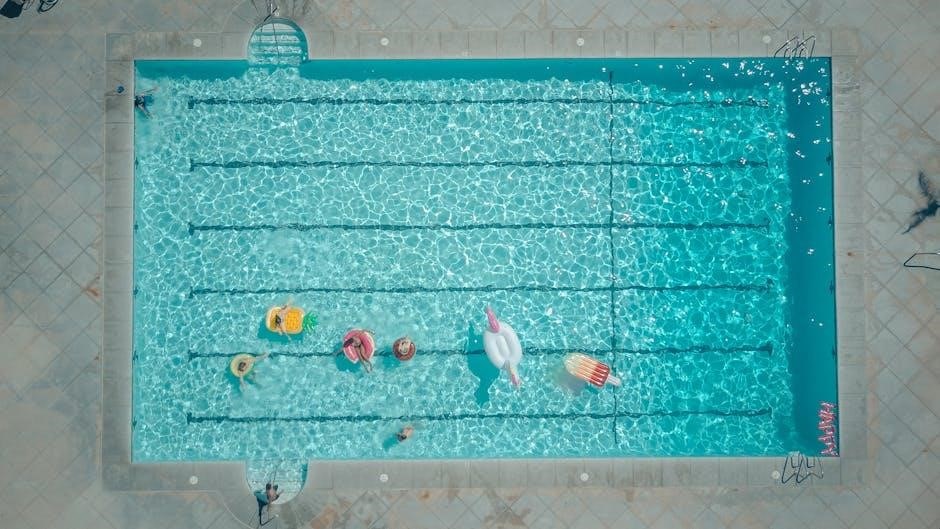
Utilizing Instructional Pools for Specific Training
Instructional pools facilitate specialized training like freediving – static and dynamic apnea – and innovative techniques such as EWAC underwater treadmill workouts, enhancing aquatic skills.
Freediving Pool Training: Static and Dynamic Apnea
Instructional pools provide a safe and controlled environment crucial for freediving training, specifically focusing on static and dynamic apnea. Daily sessions, under direct instructor supervision, allow divers to progressively build breath-holding capabilities. Static apnea involves remaining motionless at the surface, maximizing breath-hold duration. Dynamic apnea focuses on underwater swimming distance on a single breath.
These pool-based exercises are foundational for developing essential freediving skills, including relaxation techniques, efficient breathing patterns, and mental discipline. The consistent, supervised practice minimizes risks associated with freediving, preparing individuals for open water exploration while prioritizing safety and skill refinement.
EWAC Underwater Treadmill Training
Instructional pools equipped with EWAC underwater treadmills offer a unique rehabilitation and training modality. This specialized equipment allows for low-impact cardiovascular exercise and muscle strengthening in a buoyant aquatic environment. The EWAC treadmill is designed for safe and effective use, requiring a user guide for first-time operators to ensure proper technique and safety protocols are followed.
Professionals utilize this technology for injury recovery, athletic conditioning, and improving overall fitness. The adjustable speed and incline provide customizable workouts, catering to diverse needs and fitness levels, all within the controlled setting of an instructional pool.
My First SwimSchool: Tub-to-Pool Transition
Instructional pools play a crucial role in programs like “My First SwimSchool,” designed to ease children’s transition from bath time to formal swimming lessons. This program focuses on building water comfort and foundational skills in a supportive environment. It’s developed with professional swim instructors, prioritizing a gentle introduction to aquatic skills.
The tub-to-pool approach aims to set children up for success by minimizing fear and maximizing enjoyment. Instructional pools provide the ideal setting for this progression, offering shallow water and a controlled atmosphere for early water acclimation and skill development;
Pool Maintenance and Water Chemistry
Instructional pools demand rigorous maintenance, including regular cleaning, precise chlorination, and careful pH level control, ensuring consistently safe and hygienic water quality for all users.
Regular Cleaning Schedules
Instructional pools necessitate meticulously planned cleaning schedules to maintain optimal hygiene and water clarity. Daily routines should encompass skimming the surface for debris, vacuuming the pool floor to remove settled particles, and brushing the walls to prevent algae growth.
Weekly tasks include comprehensive water testing and adjustment of chemical levels, filter backwashing or cleaning, and a thorough inspection of the pool deck and surrounding areas. Monthly deep cleaning may involve draining the pool for detailed scrubbing and inspection of surfaces. Consistent adherence to these schedules is paramount for a safe and inviting learning environment, preventing the spread of waterborne illnesses and ensuring a positive experience for all swimmers.
Chlorination and Disinfection
Chlorination is a cornerstone of instructional pool maintenance, effectively eliminating harmful bacteria and viruses. Maintaining appropriate chlorine levels – typically 1-3 ppm – is crucial for safe swimming. Alternative disinfection systems, like UV or ozone, can supplement chlorine, reducing chemical usage and improving water quality.
Regular monitoring with test kits or automated systems ensures consistent disinfection. Shock treatment, periodically increasing chlorine levels, combats chloramines and organic contaminants. Proper water circulation is vital for even distribution of disinfectant. Skilled pool operators understand the delicate balance required for effective disinfection without causing irritation or compromising swimmer health.
pH Level Control
Maintaining optimal pH levels (7.2-7.8) is paramount in instructional pool water chemistry. pH affects chlorine’s effectiveness; imbalances reduce disinfection power and cause irritation. Low pH (acidic) corrodes equipment, while high pH (alkaline) leads to scaling and cloudy water.
Regular testing with accurate kits is essential. Adjustments are made using pH increaser (soda ash) or pH decreaser (muriatic acid), added carefully and with proper safety precautions. Consistent monitoring and prompt correction of pH imbalances ensure swimmer comfort, protect pool infrastructure, and maximize the efficiency of the disinfection process.
Troubleshooting Common Pool Issues
Instructional pools can encounter errors like “failed to start parallel pool” in MATLAB or “BAD POOL CALLER” blue screens, requiring system checks and restarts.
Addressing “Failed to Start Parallel Pool” Errors (MATLAB)
Instructional pool data analysis using MATLAB sometimes triggers “failed to start parallel pool” errors. Initial troubleshooting involves verifying the parallel pool configuration within MATLAB itself. Ensure a valid MATLAB license is active and compatible with parallel computing. Confirm the operating system settings support parallel processing, and that the MATLAB version is up-to-date.
Attempt restarting both MATLAB and the parallel pool. If the issue persists, meticulously examine system resources, checking for conflicts or insufficient memory. A complete MATLAB reinstall might be necessary as a last resort, alongside a review of system compatibility.
Dealing with “BAD POOL CALLER” Blue Screen Errors
Instructional pool management software, occasionally interfacing with system-level processes, can indirectly contribute to “BAD POOL CALLER” blue screen errors. These errors typically surface during system updates, specifically transitions from Windows 1809 to 1903. The issue often stems from corrupted system files or driver incompatibilities.
A common solution involves a thorough system file check (SFC) and DISM scan to repair corrupted files. Updating drivers, particularly display and network adapters, is crucial. In many cases, a clean boot can isolate the problem, and a system restore to a prior stable state often resolves the issue effectively.
Instructional Pools and Corporate Training
Instructional pools provide unique venues for business games and team-building activities, fostering collaboration and leadership skills in a refreshing, non-traditional corporate training setting.
Business Games for Executive Training
Instructional pools offer an innovative setting for executive training through immersive business games. These aren’t about swimming prowess, but strategic thinking and team dynamics. Executives can participate in simulated scenarios – perhaps a ‘rescue the company’ challenge – requiring collaborative problem-solving while navigating a unique aquatic environment.
The pool’s setting encourages out-of-the-box thinking, breaking down traditional hierarchical barriers. Activities can focus on resource allocation, risk management, and communication under pressure. The unusual environment fosters a memorable learning experience, enhancing retention and application of key business principles. It’s a departure from conventional boardrooms, promoting creativity and leadership.
Utilizing Pools for Team Building Activities
Instructional pools provide a refreshing and unconventional venue for team building. Beyond traditional exercises, aquatic challenges foster collaboration and communication in a unique setting. Teams can engage in tasks requiring synchronized movement, problem-solving under mild pressure, and reliance on each other’s strengths.
Activities might include building structures with floating materials, navigating an obstacle course, or completing a ‘rescue’ scenario. The playful environment reduces inhibitions and encourages creative solutions. This setting promotes trust and camaraderie, strengthening interpersonal bonds. It’s a memorable experience that translates to improved teamwork back in the workplace, boosting morale and productivity.
The Moscow Dive Show and Aquatic Events
Instructional pools often serve as venues for competitive swimming and diving training, like those showcased at the Moscow Dive Show – Russia’s largest aquatic exhibition.
Pools as Venues for Competitive Swimming
Instructional pools, beyond their educational role, frequently transform into dynamic arenas for competitive swimming events. These facilities provide a controlled and standardized environment crucial for fair competition. The Moscow Dive Show exemplifies this, showcasing pools hosting various levels of swimming contests.
Properly designed instructional pools, adhering to specific dimensions and safety standards, are ideal for local meets, qualifying events, and even training camps for elite athletes. Their adaptable nature allows for adjustments to lane configurations and timing systems, catering to diverse competitive needs. The availability of such pools significantly boosts aquatic sports participation within communities.
Diving Training and Certification
Instructional pools, when equipped with appropriate diving boards and safety features, extend their utility to diving training and certification programs. The Moscow Dive Show highlights the importance of such facilities for promoting aquatic skills. These pools offer a controlled environment for beginners to learn fundamental diving techniques, progressing to more complex maneuvers under expert guidance.
Certification courses, ranging from introductory levels to advanced diver qualifications, are frequently conducted in instructional pools. The controlled depth and clear visibility enhance safety and facilitate effective skill development. Properly maintained pools ensure optimal conditions for aspiring divers to gain confidence and proficiency.
Genetic Technologies and Pool Terminology
KO single clone versus KO cell pool distinctions relate to genetic modification; however, these terms aren’t directly linked to the function or design of an instructional pool.
KO Single Clone vs. KO Cell Pool
KO single clone and KO cell pool represent differing approaches within gene knockout technology, a process irrelevant to the physical characteristics or operational purpose of an instructional pool. A KO single clone originates from a single, genetically modified cell, ensuring complete homogeneity – all cells possess the identical knockout. Conversely, a KO cell pool comprises a population of cells where the gene knockout occurred randomly, resulting in genetic variability.
The distinction lies in genotype consistency; clones are uniform, while pools are diverse. This concept, crucial in genetic research, has no bearing on pool design, safety features, or training programs. It’s a purely biological distinction unrelated to aquatic facilities.
Pronunciation of “Pool”
“Pool” is pronounced /puːl/ with a tight vowel sound, requiring pursed lips and tense facial muscles. Contrast this with /pʊl/, a more relaxed pronunciation.
Understanding the Difference Between /u/ and /ʊ/ Sounds
Distinguishing between the /u/ and /ʊ/ sounds is crucial for accurate pronunciation, even when discussing instructional pools. The /u/ sound, as in “pool” (puːl), demands a tightly formed mouth, with lips noticeably puckered and cheek muscles engaged. It’s a tense vowel. Conversely, the /ʊ/ sound, exemplified in “pull” (pʊl), allows for a more relaxed mouth position.
Lips don’t need to be as rounded, and the cheek muscles remain less tense. This subtle difference significantly impacts clarity. Mastering this distinction, as highlighted by Lai Shixiong, enhances communication and ensures correct articulation when referencing aquatic facilities or training programs. Recognizing this nuance improves overall linguistic precision.
Future Trends in Instructional Pool Design
Emerging trends prioritize technology integration for enhanced learning and sustainable practices. Designs focus on water conservation, creating eco-friendly and innovative instructional pool environments.
Integration of Technology for Enhanced Learning
Instructional pools are increasingly incorporating technology to revolutionize swim education. This includes utilizing underwater cameras for stroke analysis, providing real-time feedback to swimmers and instructors. Interactive displays can project pacing guides and technique demonstrations directly into the pool area, enhancing visual learning.
Furthermore, sensors can monitor swimmer performance metrics like speed, distance, and stroke rate, offering data-driven insights. Virtual reality applications are also emerging, allowing swimmers to practice in simulated environments. These technological advancements aim to personalize learning, improve efficiency, and make swim instruction more engaging and effective for all participants.
Sustainable Pool Design and Water Conservation
Instructional pools are evolving towards eco-friendly designs prioritizing water conservation. Implementing rainwater harvesting systems and greywater recycling significantly reduces freshwater demand. Advanced filtration technologies, like regenerative media filters, minimize backwashing and water waste. Variable frequency drives on pumps optimize energy consumption, lowering operational costs and environmental impact.
Pool covers reduce evaporation and heat loss, further conserving resources. Sustainable materials, such as recycled decking and low-VOC paints, contribute to a healthier environment. These practices demonstrate a commitment to responsible pool operation and long-term sustainability.